The Golden Buddha of Bangkok: A Statue Hidden in Plain Sight
The Golden Buddha Bangkok holds at Wat Traimit is the best story on any temple route in the city, and it only exists because of an accident. For most of its recorded life the statue was an ordinary stucco Buddha of no particular distinction, moved from temple to temple without much ceremony. Then, in the 1950s, it was dropped — and beneath the cracked plaster was five and a half tonnes of solid gold. It remains the largest solid gold statue in the world, and it sits at the entrance to Chinatown.
The Accident That Revealed It
The image had been housed under a simple tin roof at Wat Traimit for years while a proper hall was built. When the time came to move it, the lifting ropes gave way and the statue fell. The plaster casing cracked open, and a monk noticed a glint through the damage.
Under the stucco was gold — not gilding, but a solid gold image cast in the Sukhothai style, dating to roughly the thirteenth or fourteenth century, in the region of five and a half tonnes.
Why It Was Hidden
The accepted explanation is protective disguise. Ayutthaya faced repeated Burmese invasions, and a solid gold image was an obvious target. Encasing it in plaster made it look worthless. The disguise worked so completely that whoever knew the secret died with it, and the statue passed through centuries and several relocations while everyone involved assumed it was ordinary stucco.
It is also built in sections, designed to be dismantled and moved — another sign the original makers planned for exactly the kind of upheaval that came.
Where It Sits Today
Wat Traimit stands at the western end of Yaowarat, effectively the gateway to Chinatown, and the temple was substantially rebuilt to give the image the setting it deserves. The Golden Buddha now sits in a purpose-built hall, with exhibitions on the statue's history and on the Chinese community that built the neighbourhood around it.
What to Expect: Wat Traimit on the Route
Wat Traimit is the second landmark on the Thai Bus Food Tour route, right at the start of the Chinatown section, which makes it the natural place for the guide to open the story of Yaowarat.
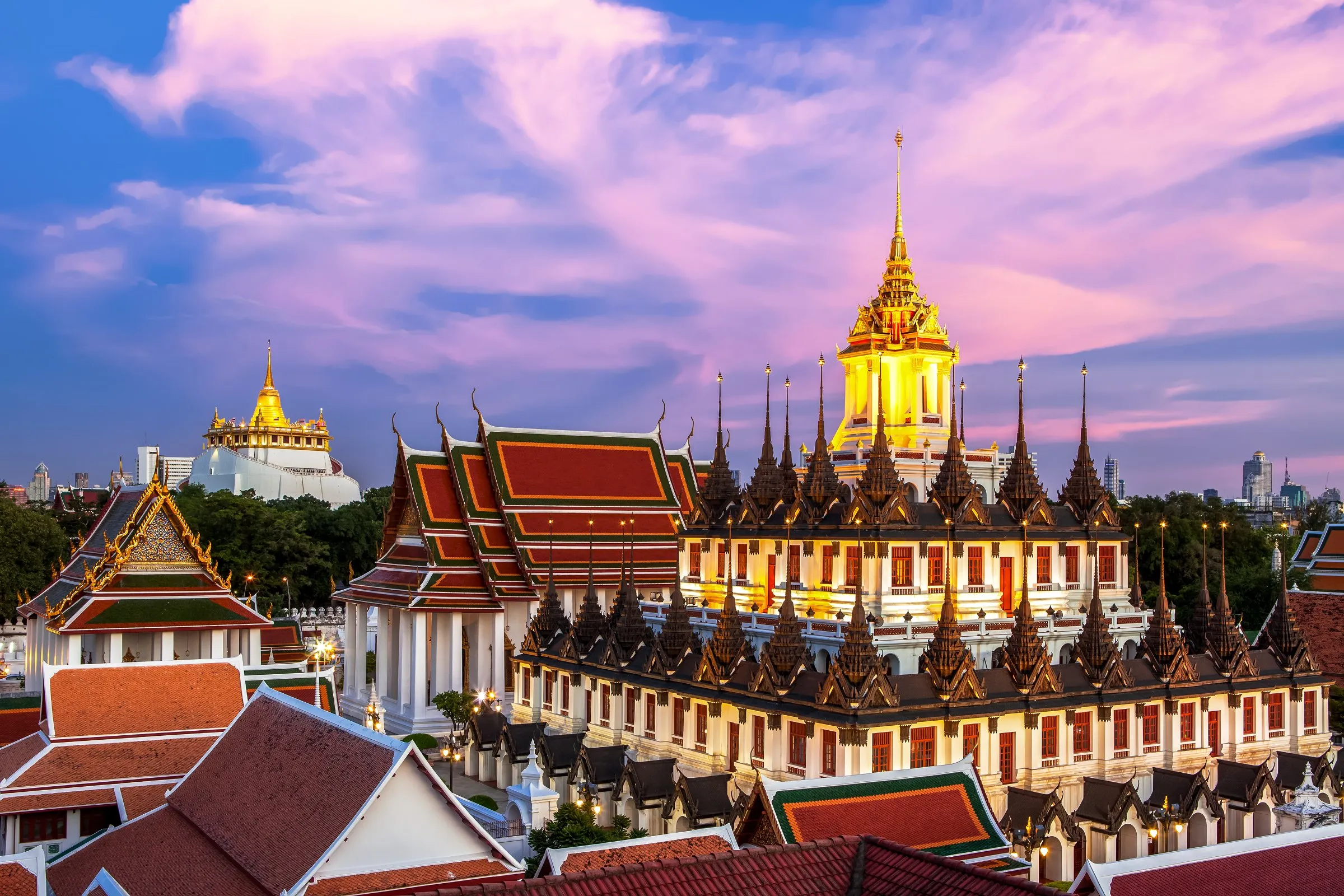
The 1.5-hour route departs River City Bangkok, Room 163, and passes more than 20 landmarks: Hua Lamphong, Wat Traimit, the Yaowarat Gate, Chinatown, Maen Si Waterworks, the Golden Mount, Loha Prasat, Democracy Monument, Wat Bowonniwet, Phra Sumen Fort, the National Museum, Sanam Luang, the Grand Palace, Wat Arun, Wat Pho, Wat Phra Kaew, the Ministry of Defence, the Giant Swing, Wat Suthat and Wat Mangkon Kamalawat.
Four rounds run daily: Wonder Lunch 11:30 AM, Sightseeing Afternoon Tea 2:00 PM, Dinner Thai Set 5:30–7:00 PM at 1,890 THB per person, and Bangkok Nightlife 7:30 PM. The evening rounds catch Chinatown with its neon lit. For the neighbourhood's full history see the story of Bangkok's Chinatown, and for Chinatown's principal Chinese temple, Wat Mangkon and the Vegetarian Festival.
Tips for Visiting Wat Traimit
Go in the morning if you want the hall quiet; it fills up with tour groups by late morning. Shoulders and knees must be covered, as at any working temple. The statue itself is smaller than photographs suggest — its significance is in the material, not the scale. The exhibition floors are genuinely worth the extra twenty minutes, particularly the section on Chinese migration to Bangkok. And since it sits at the mouth of Yaowarat, pair it with Chinatown rather than treating it as a separate trip.
The Best Story on the Route
The Golden Buddha Bangkok keeps at Wat Traimit is a reminder that this city hides things in plain sight for centuries at a time. A statue everyone walked past, worth more than the temple that housed it, revealed by a dropped rope.
Want the story told as you pass it? 🎟️ Book your seat on the Thai Bus Food Tour. Reserve your round now →
Frequently Asked Questions
Around five and a half tonnes of solid gold, making it the largest solid gold statue in the world.
In the 1950s, while being moved at Wat Traimit, it was dropped and the plaster casing cracked, revealing solid gold underneath.
Almost certainly to disguise it from invading armies during the Ayutthaya period. The disguise outlasted everyone who knew about it.
At Wat Traimit, at the western end of Yaowarat Road, effectively the gateway to Chinatown.
More from the blog
Bangkok Dinner Cruise or Dining Bus? An Honest Comparison
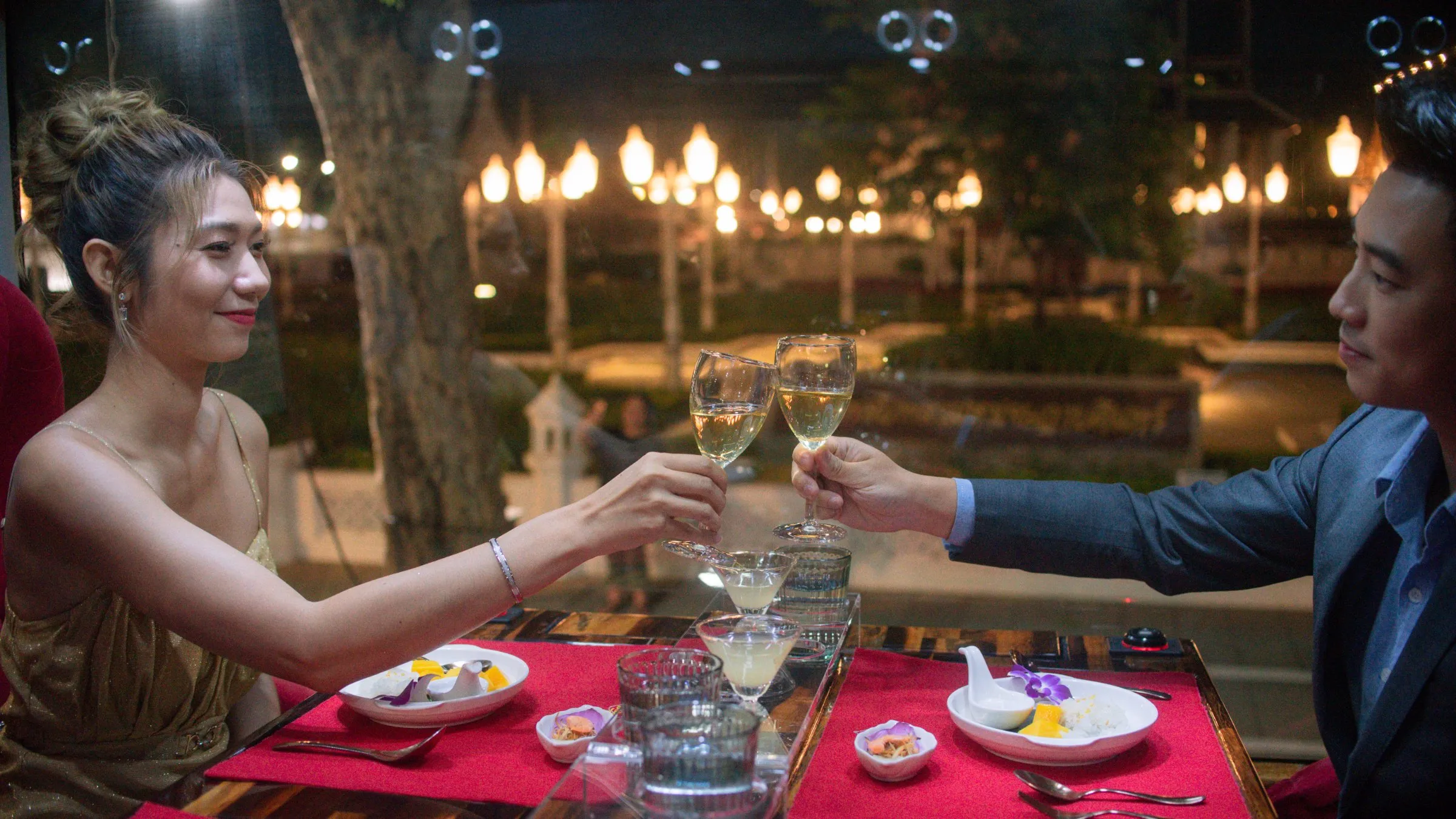
Both serve dinner with a view of Bangkok. They show you almost entirely different cities, and the right answer depends on which one you came to see.
Read more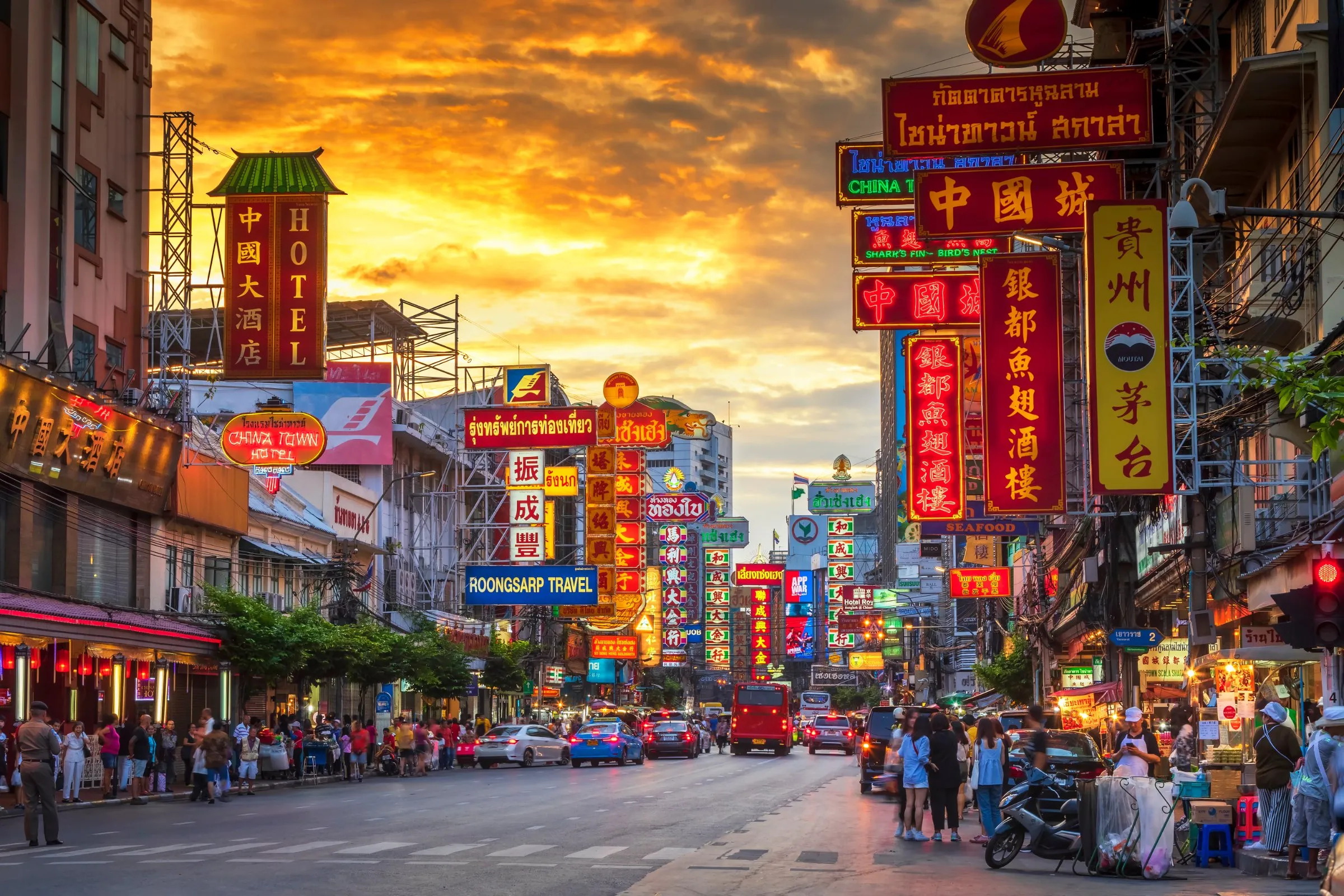
Bangkok Layover: What You Can Actually Do in Six Hours
A six-hour layover is not six hours in Bangkok. Subtract immigration, transfers and a safe buffer and you are left with two or three — here's what fits.
Read more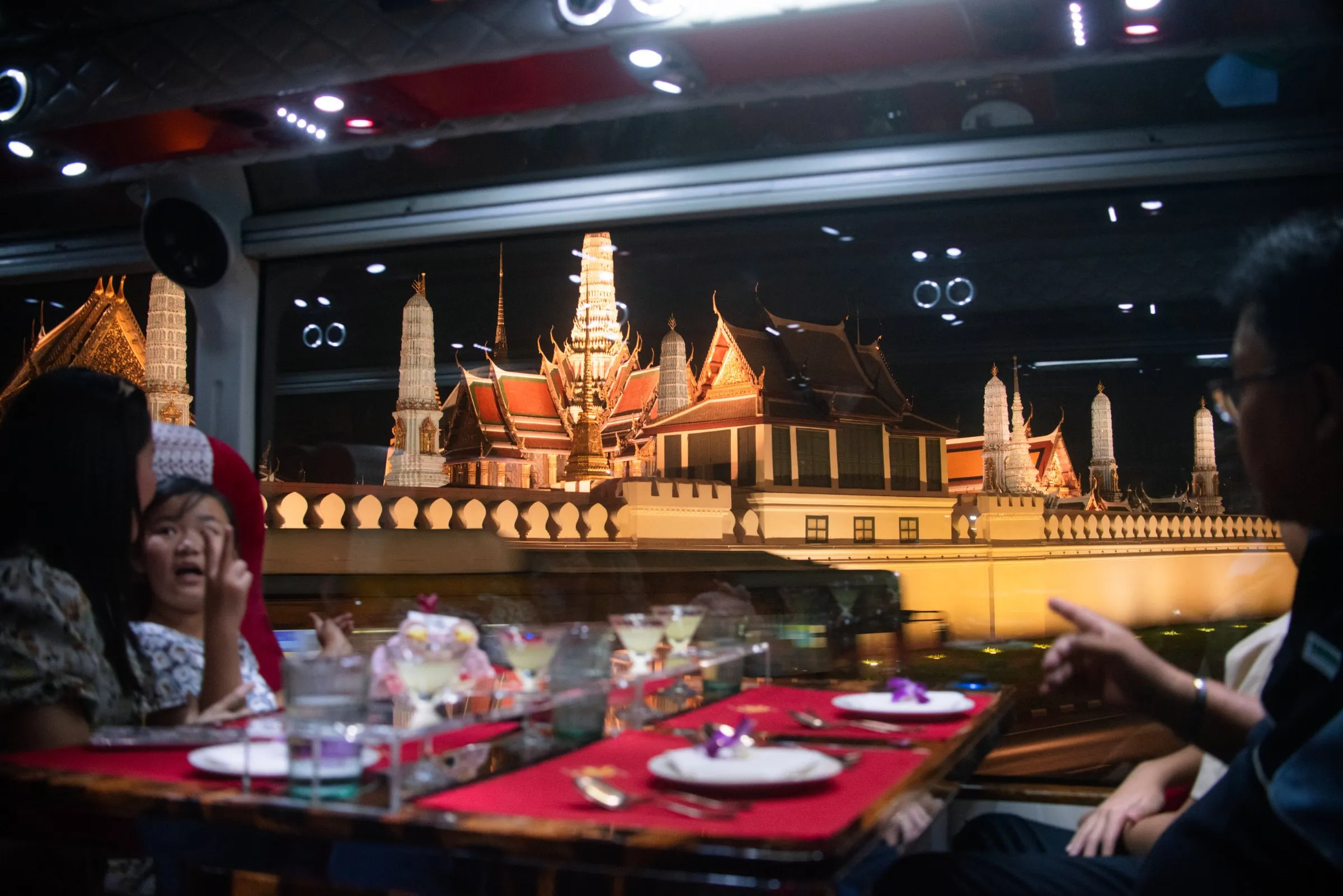
Bangkok Photo Spots: Where the Old Town Actually Looks Best
Everyone shoots the same rooftops. The Old Town's best frames come from street level after dark — and from one vantage point most photographers never get to use.
Read more