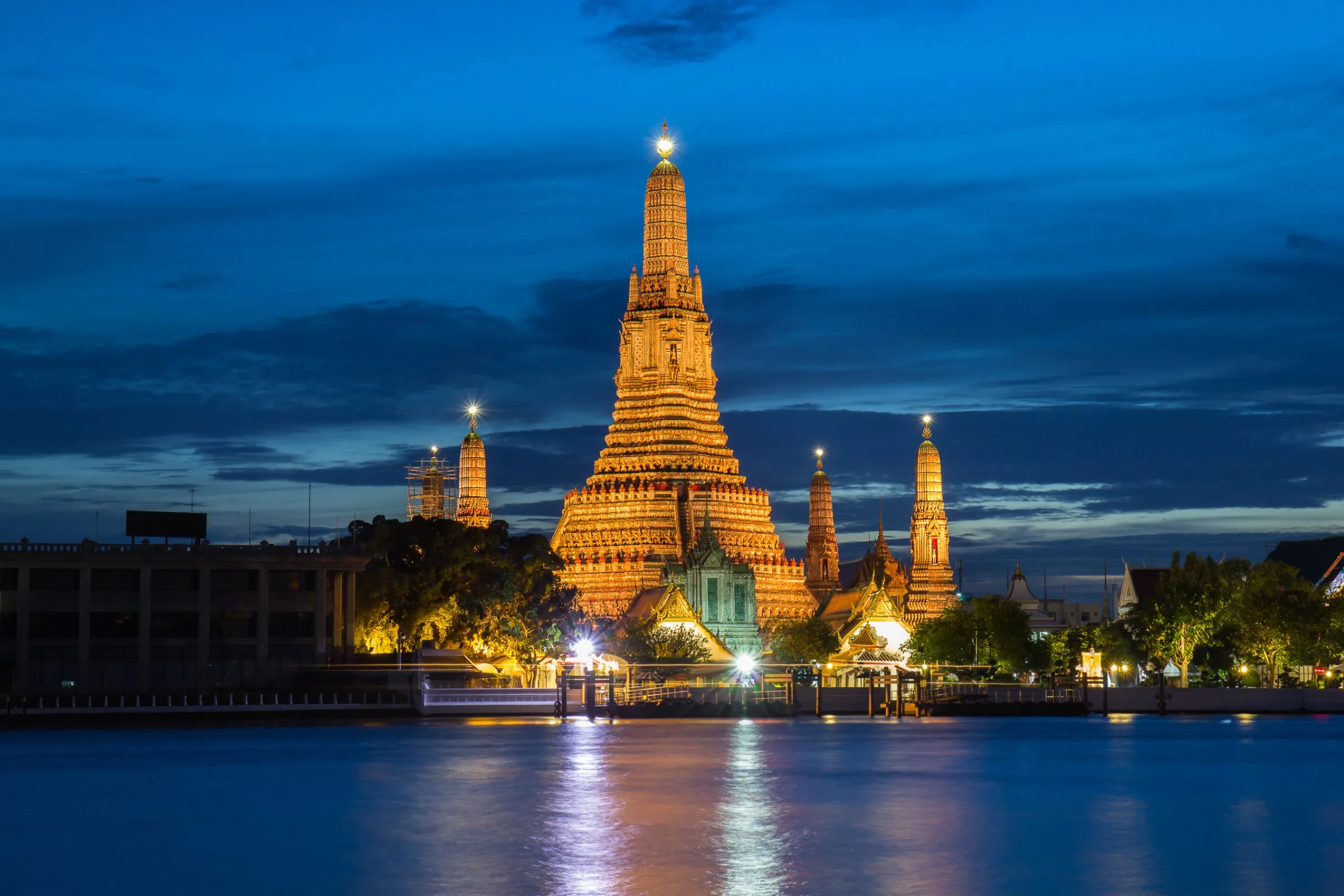
Wat Arun at Night: Why the Temple of Dawn Belongs to the Evening
It is named for the dawn, and it faces east to catch the first light — but ask anyone who lives here and they will tell you that Wat Arun at night is the better sight. After sunset the floodlights come on and the whole 70-metre prang turns pale gold against a black river, its surface catching the light in thousands of tiny points. The Temple of Dawn is Bangkok's most photographed structure, and the photograph almost everyone actually wants is taken after dark.
A Temple Older Than the City
Wat Arun predates Bangkok. A temple stood on this site during the Ayutthaya period, and when King Taksin established his capital at Thonburi in 1768, it became his royal temple — briefly housing the Emerald Buddha before it crossed the river to Wat Phra Kaew. The great central prang that defines the skyline today was raised much later, in the reigns of Rama II and Rama III, in the Khmer-influenced style that makes it look unlike any other temple in the city.
The Porcelain Secret
Get close and Wat Arun's surface dissolves into fragments: millions of pieces of Chinese porcelain, pressed into the stucco to form flowers, stars and patterns across the entire tower. The traditional explanation is thrifty and charming — Chinese trading ships used porcelain as ballast, and broken pieces were donated rather than discarded. Whatever the origin, the effect is what makes the temple glitter at sunrise and glow under floodlight, since every fragment catches the light at its own angle.
What to Expect: The View From the Other Bank
Here's the practical truth that surprises visitors: the best view of Wat Arun is not from Wat Arun. The temple sits on the Thonburi side, so to see the famous silhouette whole you need to be across the water, on the Rattanakosin bank — which is exactly where our route runs. From the upper deck, the prang appears across the river with nothing in the way, lit and reflected, while dinner is served at your table.
The 1.5-hour journey departs River City Bangkok (Room 163) and passes more than 20 Old Town landmarks, including the Grand Palace, Wat Pho, the Giant Swing, Loha Prasat and Yaowarat. For Wat Arun specifically, take the Dinner Thai Set round (5:30 PM) for the sunset transition, or Bangkok Nightlife (7:30 PM) for the full floodlit version. More evening ideas are in our guide to things to do in Bangkok at night, and the wider Old Town picture is in the Rattanakosin guide.
Tips for Seeing Wat Arun Lit Up
The best window is the half hour after sunset, when the sky still holds colour behind the floodlit tower — full darkness is dramatic but flatter. Shoot from the Rattanakosin bank or from the river itself, never from the temple grounds. If you plan to climb the prang's steep steps, that has to be a daytime visit, since the temple closes in the early evening. And dress modestly if you're going inside.
The City's Best Night View
Bangkok has rooftop bars charging serious money for a skyline. Wat Arun at night is free, older than the capital, and better looking than any of them — you just need to be on the correct side of the river.
Want to see it from the right bank, with dinner served? 🎟️ Book the evening round of the Thai Bus Food Tour. Reserve your sunset seat →
Frequently Asked Questions
It's named for Aruna, the Hindu deity of dawn, and faces east to catch first light. The floodlighting is modern — and, most locals would say, an improvement.
The grounds close in the early evening, so night viewing means seeing it lit from outside — from across the river, from a boat, or from the road on the Rattanakosin bank.
Millions of fragments of Chinese porcelain set into stucco, traditionally said to have come from ballast carried by trading ships.
The central prang rises roughly 70 metres, making it one of the tallest religious structures in Bangkok.
More from the blog
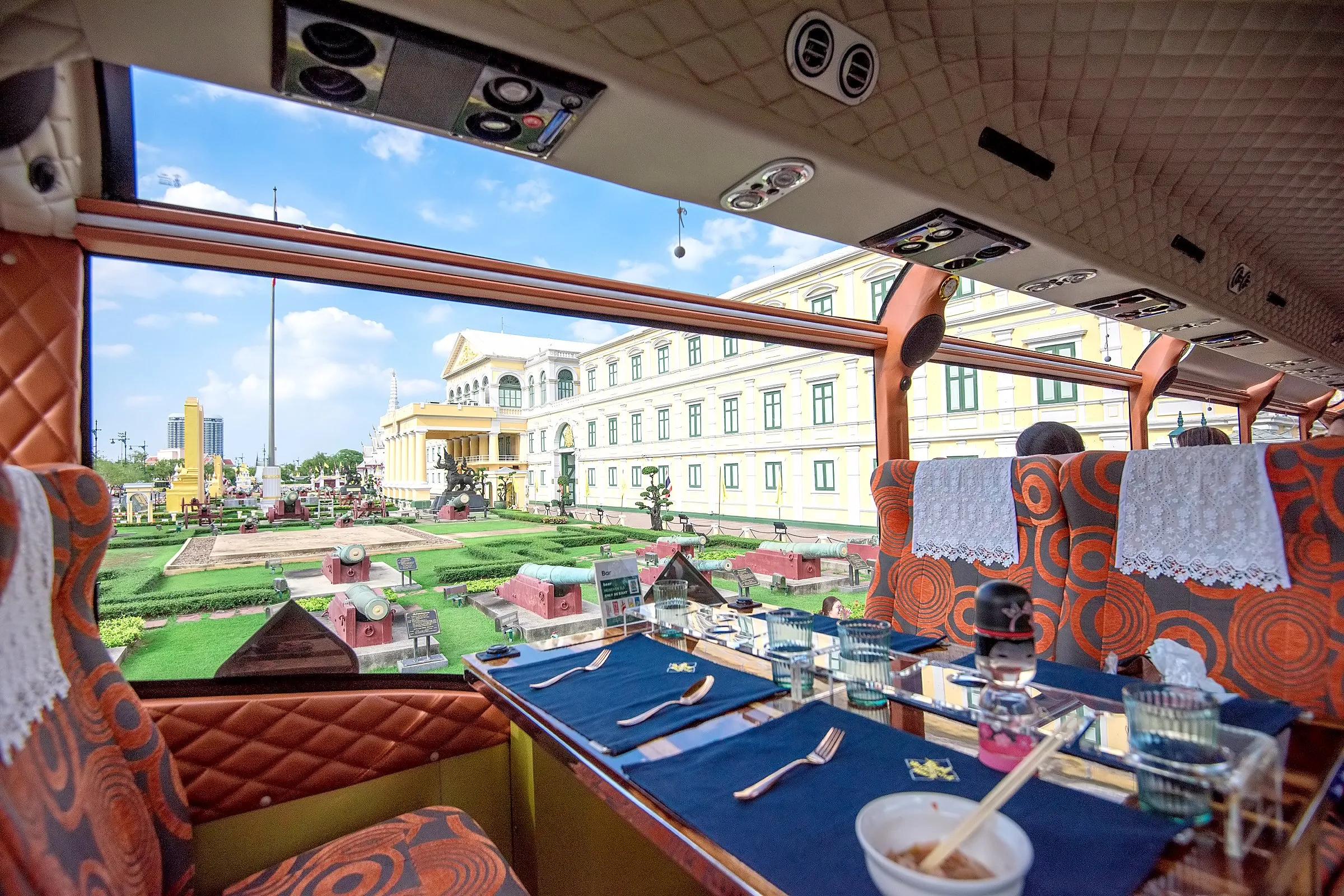
Afternoon Tea in Bangkok, Except the View Comes With You
Every afternoon tea in Bangkok offers the same thing: a lounge, a tiered stand, and a view that stays put. This one takes the view with it, past twenty landmarks.
Read more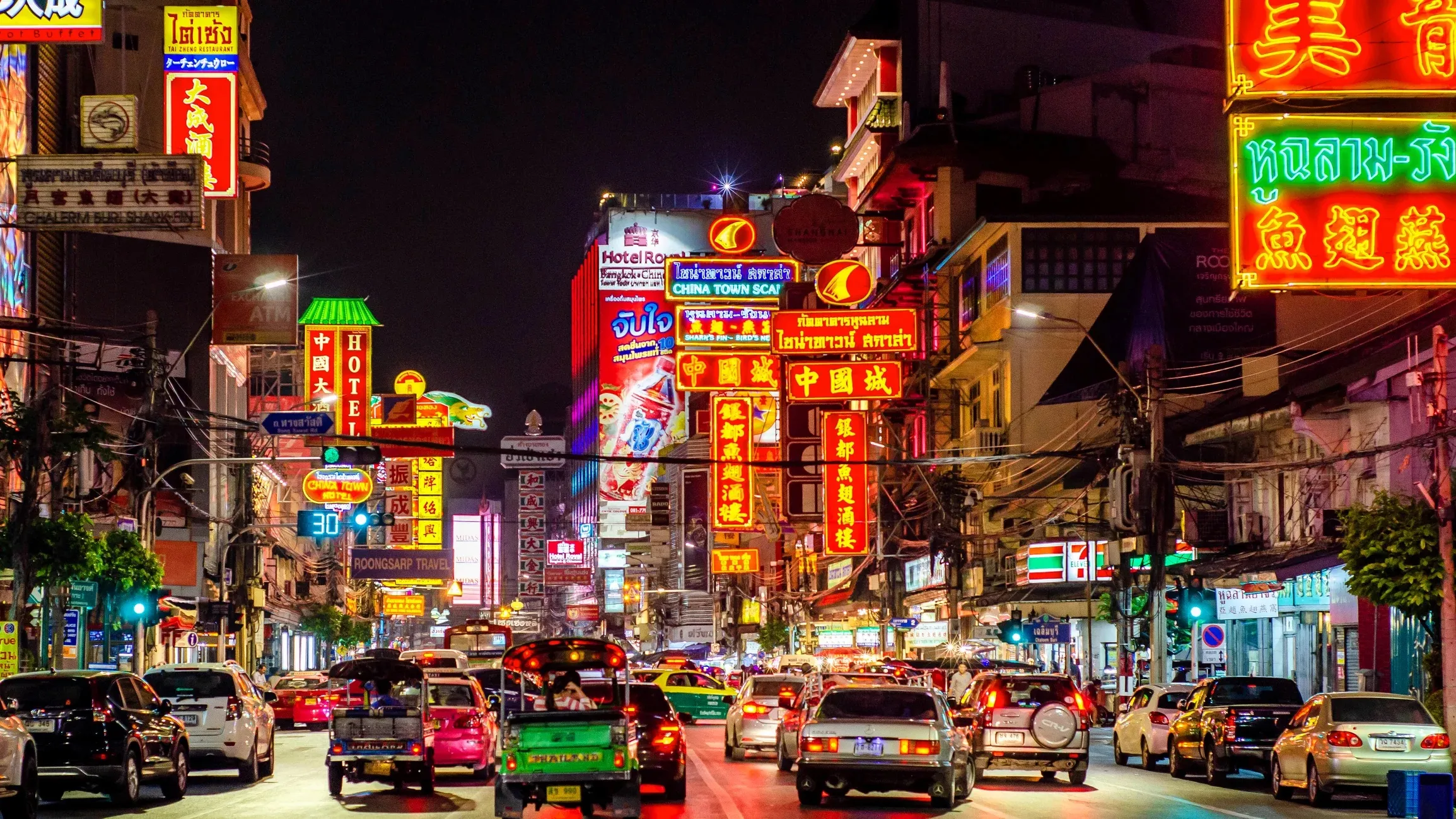
Bangkok Chinatown History: How Yaowarat Became the City's Most Delicious Street
Yaowarat exists because a king needed the land it stood on. Two and a half centuries later it's Bangkok's densest, brightest, most delicious street — here's how that happened.
Read more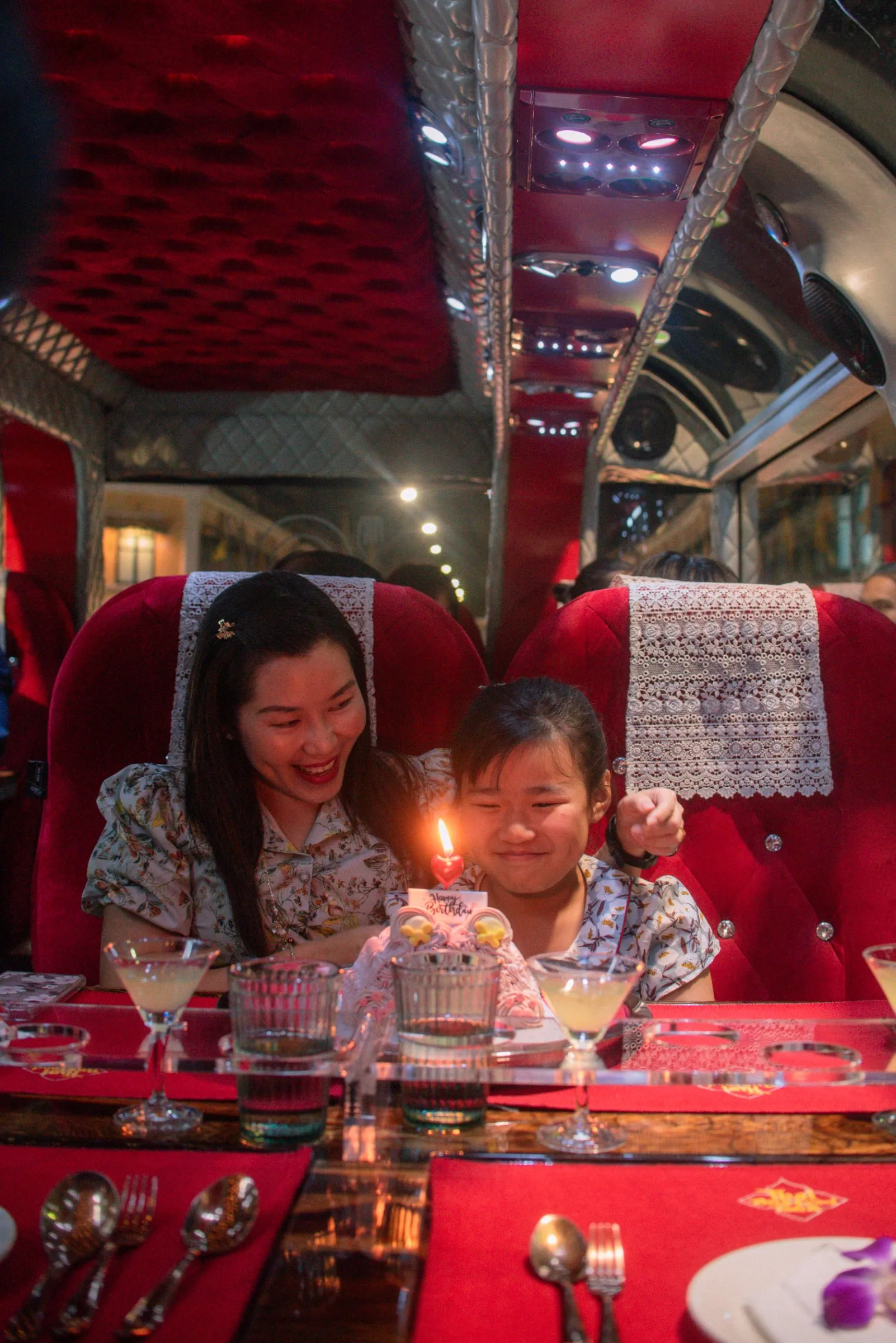
Birthday Dinner in Bangkok: The Celebration That Goes Somewhere
The problem with a birthday dinner is that everyone's been to the restaurant before. This one moves through the Old Town, so the evening has somewhere to go.
Read more