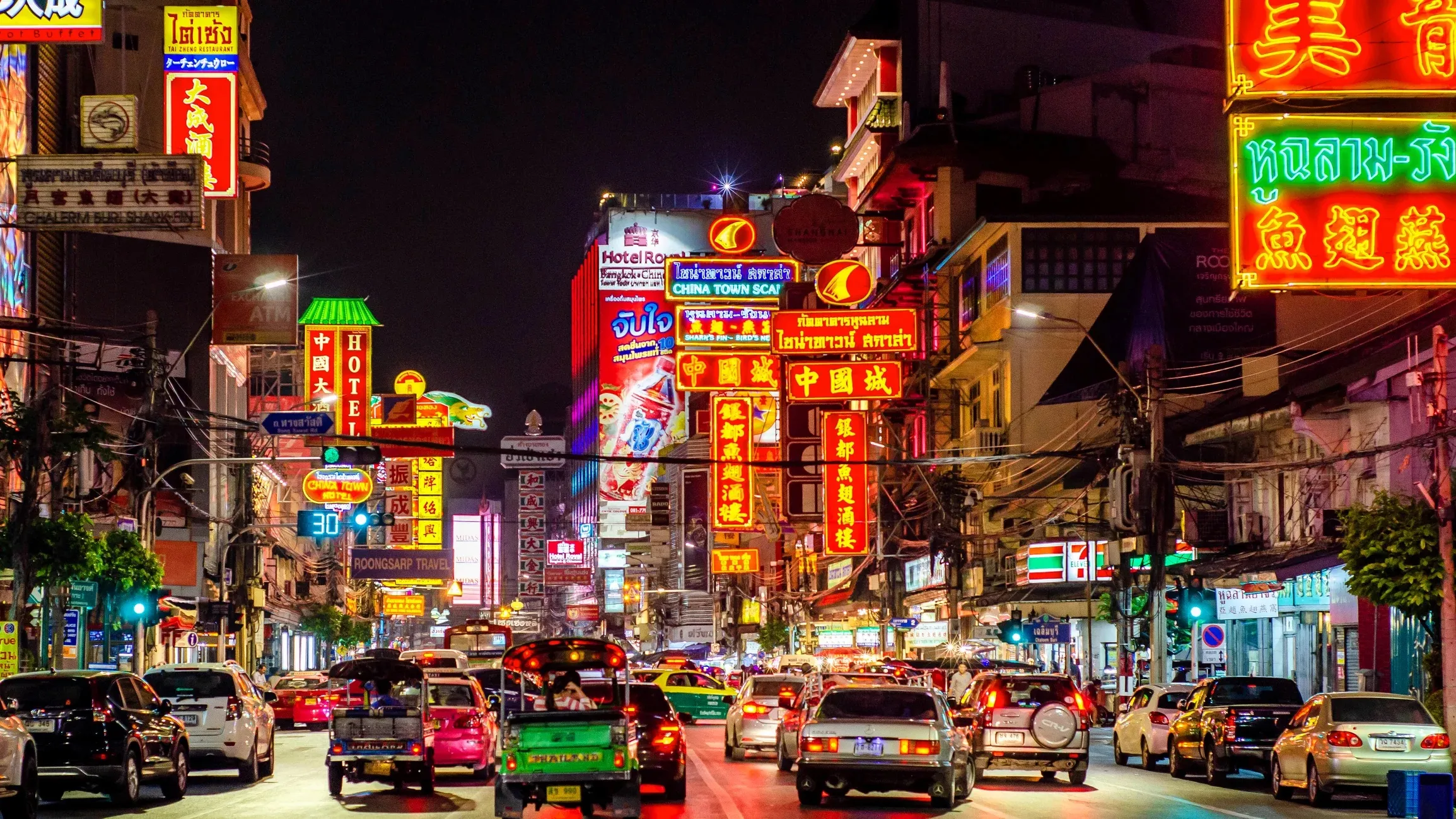
Bangkok Chinatown History: How Yaowarat Became the City's Most Delicious Street
Most visitors arrive in Yaowarat for the food and leave without ever learning why it's there. The Bangkok Chinatown history is better than the guidebook version: this neighbourhood exists because a king needed the land it originally stood on, and the community that was moved out built something that outlived the palace's own commercial district. Two and a half centuries later, Yaowarat is the densest, brightest and — by most reckonings — the most delicious street in Thailand.
1782: A Community Asked to Move
When Rama I chose the east bank of the Chao Phraya for his new capital in 1782, the site was already occupied by a well-established Chinese trading community, mostly Teochew merchants. The land was needed for the Grand Palace. The community was relocated downriver to the district of Sampheng, just outside the new city walls — and there, on marshy ground beside the river, it thrived. Proximity to the docks turned Sampheng into Bangkok's commercial engine within a generation.
The Dragon Road
By the late nineteenth century Sampheng's lanes were too narrow for the traffic they carried. King Rama V ordered a new road cut through the district, completed around 1900 and named Yaowarat. Rather than driving it straight, the engineers followed the existing terrain and property lines, giving the road its distinctive curve — a shape locals have long read as the body of a dragon, with the head at Odeon Circle. Whether the curve was deliberate symbolism or practical surveying is still argued over in Chinatown coffee shops, which is exactly the kind of detail a good guide enjoys.
Three Landmarks That Tell the Whole Story
Yaowarat Gate (the Odeon Circle arch) — the ceremonial entrance, built to mark King Bhumibol's sixth-cycle birthday, and now the neighbourhood's most photographed spot.
Wat Traimit — a modest temple that became world-famous by accident. In the 1950s, workers moving a large plaster Buddha dropped it. The plaster cracked, and beneath it was solid gold: over five tonnes of it, almost certainly disguised centuries earlier to hide it from invaders. It is the largest solid gold Buddha image in the world.
Wat Mangkon Kamalawat — founded in 1871 and Bangkok's most important Chinese Buddhist temple. Every autumn it becomes the epicentre of the nine-day Vegetarian Festival, when yellow flags go up along Yaowarat and the whole street turns jay.
What to Expect: Chinatown From Above the Crowd
Walking Yaowarat at night is an experience — and a shoulder-to-shoulder one. Seeing it from the upper deck of a moving dining bus is a different pleasure entirely: the neon at eye level, the gate framed ahead, the side lanes opening and closing as you pass, and Michelin-listed Thai-Chinese dishes arriving at your table while the guide fills in the history above. The 1.5-hour route departs River City Bangkok (Room 163) and continues on through Rattanakosin Old Town past more than 20 landmarks, including the Grand Palace, Wat Arun, Wat Pho, Loha Prasat and the Giant Swing.
The Dinner Thai Set (5:30 PM) and Bangkok Nightlife (7:30 PM) rounds are the ones for Chinatown, when the signs are lit. For the food-first version of this journey, see our Bangkok Chinatown food tour; for the wider picture, start with the Rattanakosin Old Town guide.
Tips for Visiting Yaowarat
Go after dark — Yaowarat is a night street and looks half-asleep by day. Avoid arriving by car if you plan to walk, because parking is close to impossible and the traffic is legendary. If you visit during the Vegetarian Festival, expect crowds and yellow flags everywhere, and know that almost every stall will be serving jay food. And carry small notes; the best vendors are cash-only.
A Neighbourhood Built by Being Moved
The Bangkok Chinatown history is, in the end, a story about what a displaced community can build when it's given a riverbank and left alone: a gate, a golden Buddha, a dragon-shaped road, and the best street food in Southeast Asia.
Want the story told as you pass it? 🎟️ Book your seat on the Thai Bus Food Tour. Reserve your Chinatown round →
Frequently Asked Questions
It dates to 1782, when the Chinese community was relocated from the site of the Grand Palace to Sampheng — making it as old as Bangkok itself.
It was cut through an existing dense district in the 1890s, following the terrain and property lines. Locals read the resulting shape as a dragon, with the head at Odeon Circle.
A Buddha image of over five tonnes of solid gold, hidden under plaster for centuries and rediscovered in the 1950s when the plaster cracked during a move. It is the largest of its kind in the world.
Yes. Our route runs through Yaowarat with the landmarks narrated as you pass — comfortable, air-conditioned and crowd-free.
More from the blog
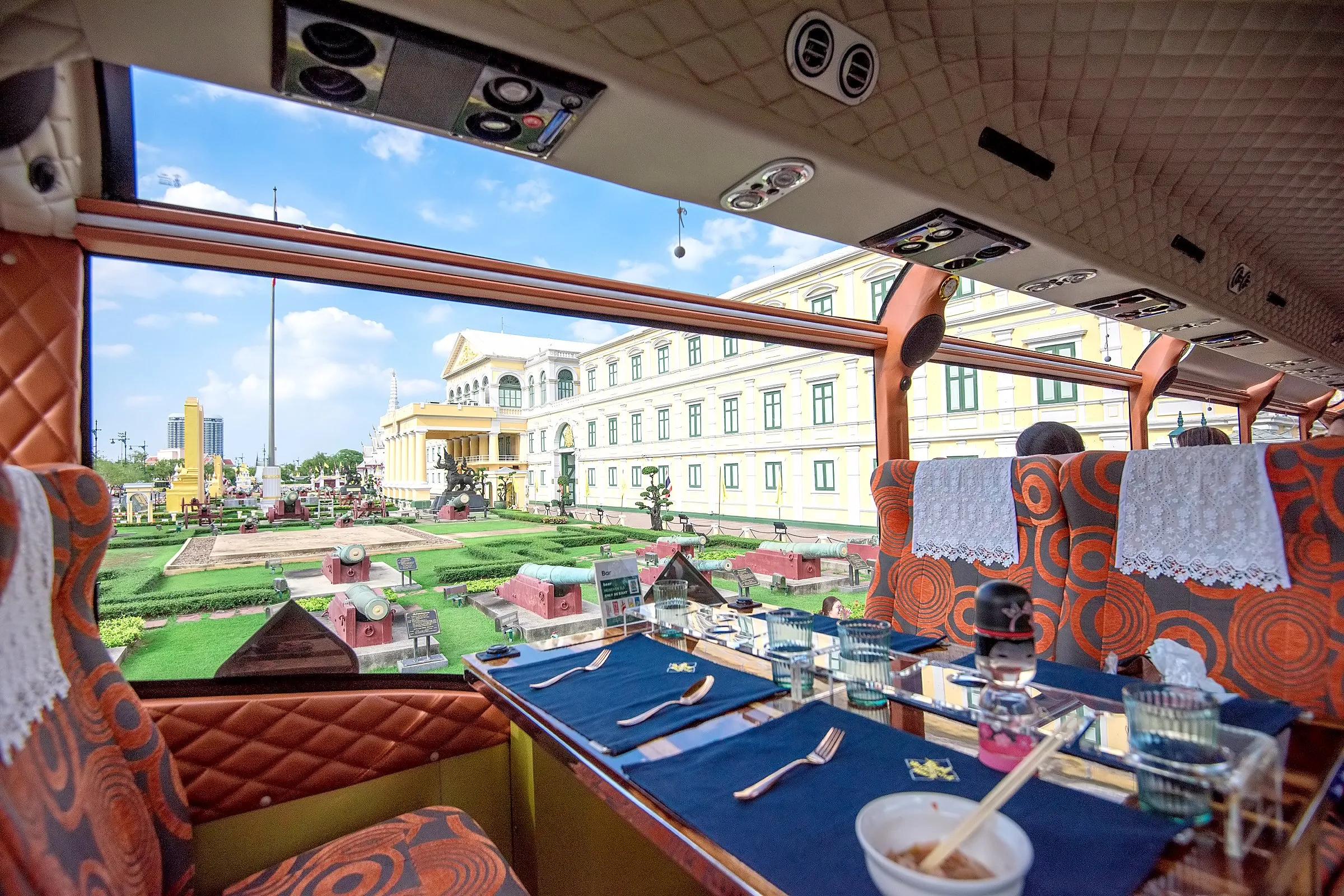
Afternoon Tea in Bangkok, Except the View Comes With You
Every afternoon tea in Bangkok offers the same thing: a lounge, a tiered stand, and a view that stays put. This one takes the view with it, past twenty landmarks.
Read more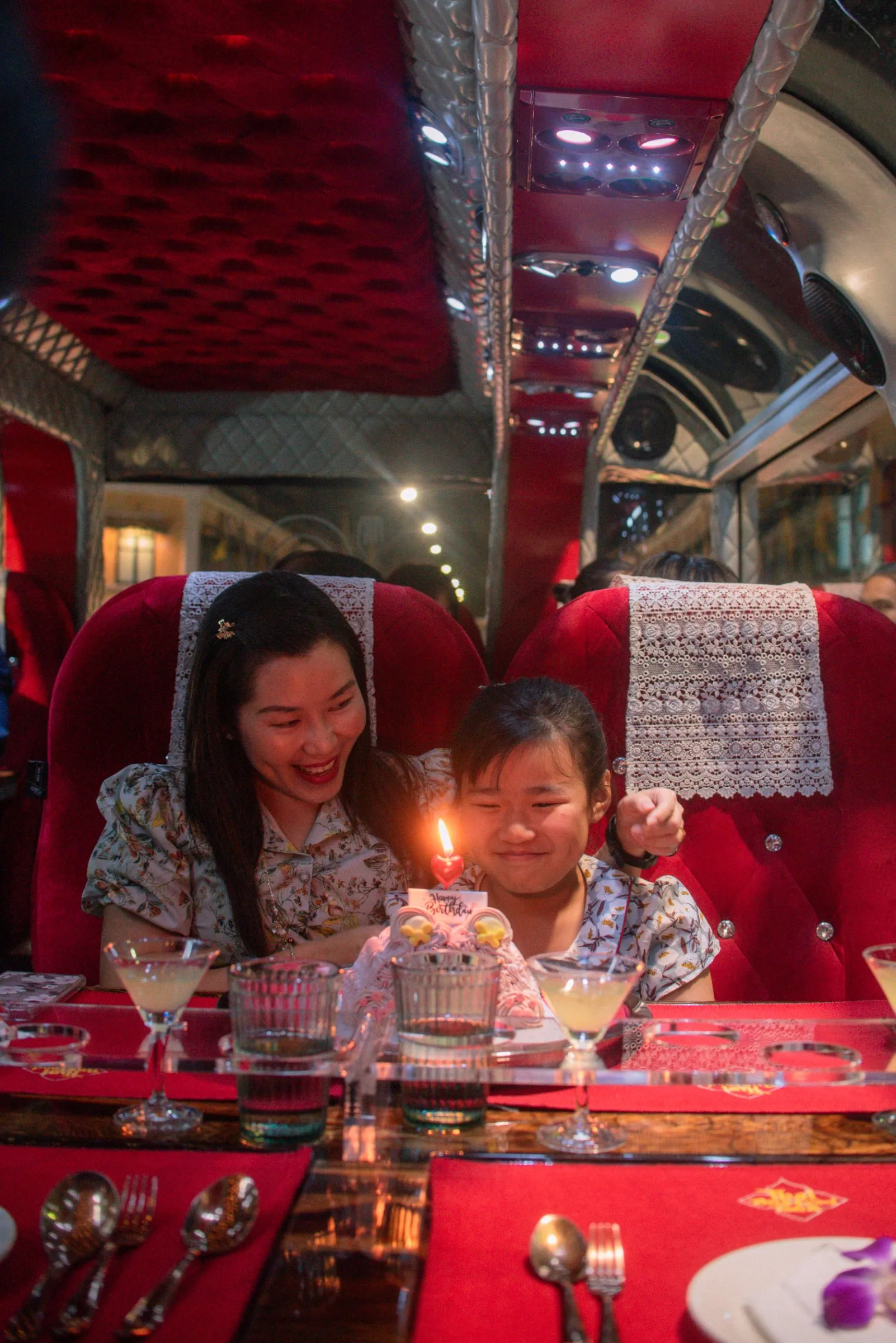
Birthday Dinner in Bangkok: The Celebration That Goes Somewhere
The problem with a birthday dinner is that everyone's been to the restaurant before. This one moves through the Old Town, so the evening has somewhere to go.
Read more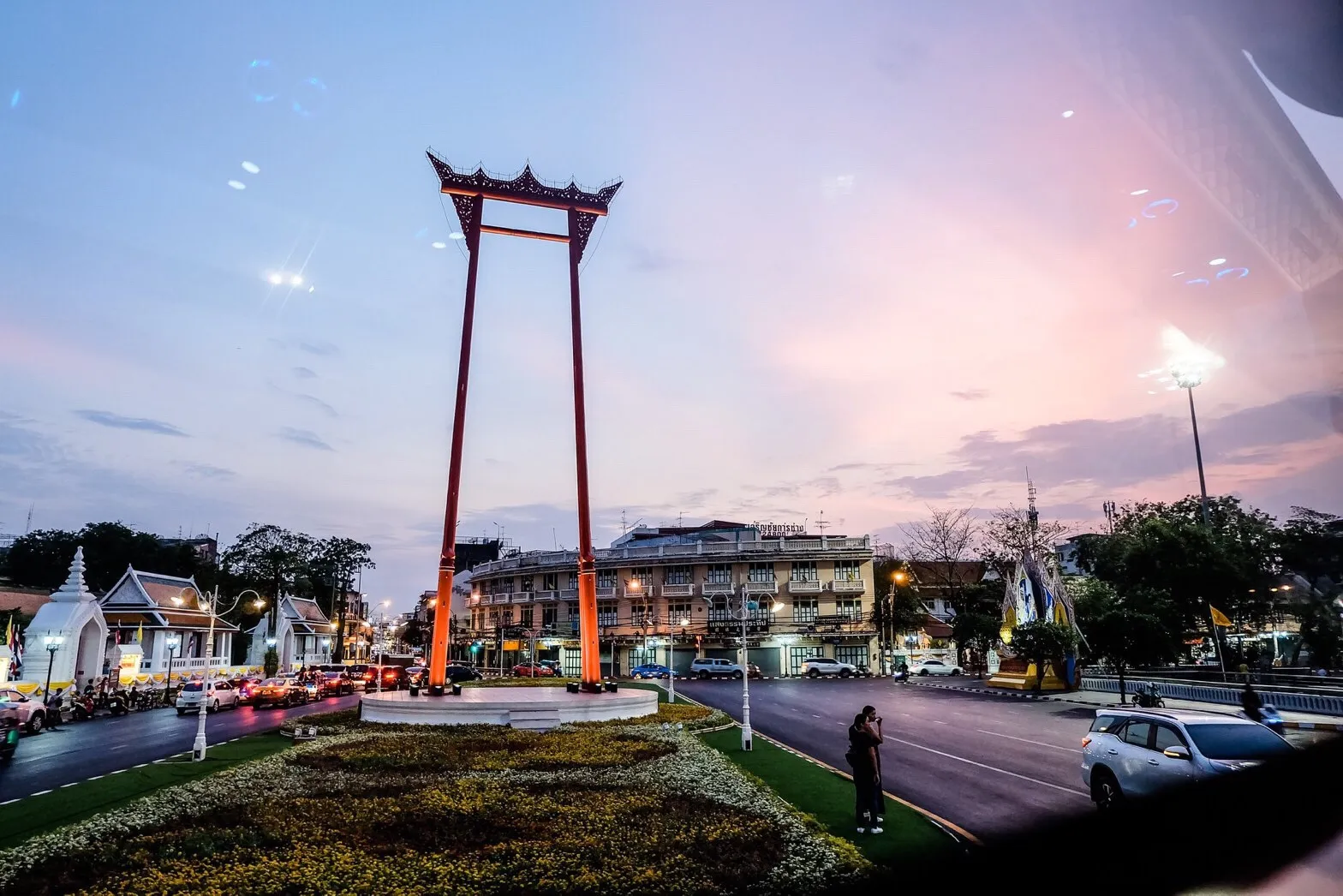
Rattanakosin Bangkok: The Royal Island Where the City Began
Almost every landmark you came to Bangkok for sits inside one small island barely two kilometres across. Here's what Rattanakosin is, why it was built that way, and all 20 sights in the order you'll meet them.
Read more