Rattanakosin Bangkok: The Royal Island Where the City Began
Here is something most visitors discover only after they have booked three separate taxis: almost every landmark on their Bangkok list sits inside one small area, barely two kilometres across. Rattanakosin Bangkok — the Old Town, the royal island, the historic heart — holds the Grand Palace, Wat Phra Kaew, Wat Pho, Wat Arun, the Giant Swing, the Golden Mount, Chinatown's edge and more than a dozen others. Understanding this one place is the single most useful thing you can learn before exploring the city, and it explains why a looping route through Bangkok Old Town shows you more in ninety minutes than a full day of criss-crossing traffic.
Why Everything Important Is in One Place
In 1782, King Rama I moved his new capital across the river and founded the Chakri dynasty here. To defend it, he had canals dug in a wide arc from the Chao Phraya back to itself, turning the site into an artificial island — Rattanakosin, the "jewelled setting" for the Emerald Buddha. Inside those walls went the palace, the royal temples, the government ministries, the Brahmin ceremonial ground and the parade field. Outside the walls went everyone else, including the Chinese merchant community relocated downriver to a stretch of road that became Yaowarat.
That single decision, more than two centuries ago, is why Bangkok's greatest sights are packed so tightly together — and why they are almost all outside, visible from the road, rather than hidden behind ticket gates.
The 20 Landmarks, in Route Order
Our 1.5-hour loop departs River City Bangkok (Room 163) and passes all of them:
- Hua Lamphong Station — the 1916 neo-Renaissance railway terminal
- Wat Traimit — home of the world's largest solid gold Buddha
- Yaowarat Gate — the ceremonial arch marking Chinatown's entrance
- Yaowarat (Chinatown) — the neon canyon
- Maen Si Waterworks — Bangkok's handsome old municipal waterworks
- The Golden Mount (Wat Saket) — the artificial hill above the Old Town
- Loha Prasat — the world's only surviving metal castle
- Democracy Monument — the centrepiece of Ratchadamnoen Avenue
- Wat Bowonniwet — the royal monastery where kings ordain
- Phra Sumen Fort — one of two surviving city-wall forts
- Bangkok National Museum — the former palace of the deputy king
- Sanam Luang — the great royal field
- The Grand Palace — the walled royal city
- Wat Arun — the Temple of Dawn across the river
- Wat Pho — the Reclining Buddha
- Wat Phra Kaew — the Temple of the Emerald Buddha
- The Ministry of Defence — the mustard-yellow colonial landmark
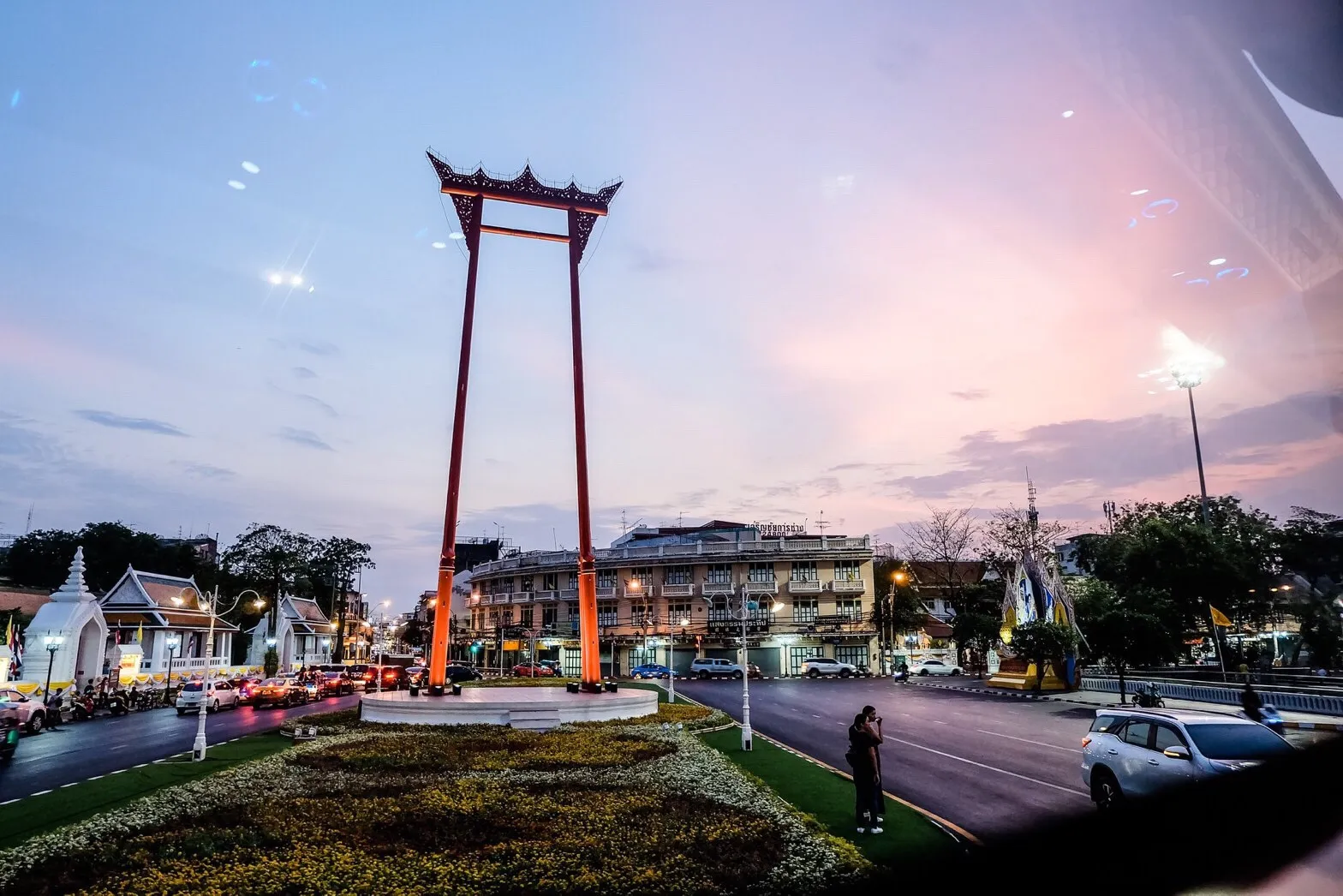
- The Giant Swing — the great red Brahmin frame
- Wat Suthat — one of Bangkok's oldest and grandest temples
- Wat Mangkon Kamalawat — Chinatown's principal Chinese temple
What to Expect: The Old Town Without the Walking
The problem with Rattanakosin Island is not distance — it's the heat, the pavements and the traffic between each stop. Our double-decker solves that by keeping you seated, air-conditioned and elevated, with Michelin-listed street food arriving at your table while a live guide tells the story behind each landmark as it appears. Four rounds run daily: Wonder Lunch (11:30 AM), Sightseeing Afternoon Tea (2:00 PM), Dinner Thai Set (5:30 PM) and Bangkok Nightlife (7:30 PM), the last two catching the Old Town lit up after dark.
Want the deeper stories? Read our guides to the history of Yaowarat, Wat Arun after dark, Wat Pho and the Reclining Buddha, seeing the Grand Palace from outside and the Golden Mount and Loha Prasat.
Tips for Exploring Old Bangkok
Go early or go late — the middle of the day in Rattanakosin is unforgiving on foot. If you want to enter the Grand Palace or Wat Pho, do that in the morning when they open, then take an afternoon or evening loop to see everything else without walking. Dress modestly if temple entry is on your list. And if you're deciding how to structure the whole day, our guide to the best Bangkok sightseeing tour compares the rounds.
One Island, One Loop, One Afternoon
You could spend three days and a small fortune in taxis seeing Rattanakosin Bangkok piece by piece. Or you could see all twenty landmarks in a single air-conditioned loop, with the stories told as they pass and Michelin street food on the table in front of you.
Ready to see the whole Old Town at once? 🎟️ Book your seat on the Thai Bus Food Tour. Reserve your Old Town loop →
Frequently Asked Questions
It refers to the Emerald Buddha's "jewelled setting" — the name given to the island capital founded in 1782 and, by extension, to the whole early Bangkok era.
Small enough to loop by road in about ninety minutes, and roughly two kilometres at its widest — but dense enough to hold most of Bangkok's major landmarks.
Yes. Most of Rattanakosin's landmarks are exterior monuments — the Giant Swing, Democracy Monument, Loha Prasat's spires, Wat Arun's prang across the water, the palace walls and gates — all visible from the road.
All rounds depart from River City Bangkok (Room 163), on the river just downstream of Chinatown.
More from the blog
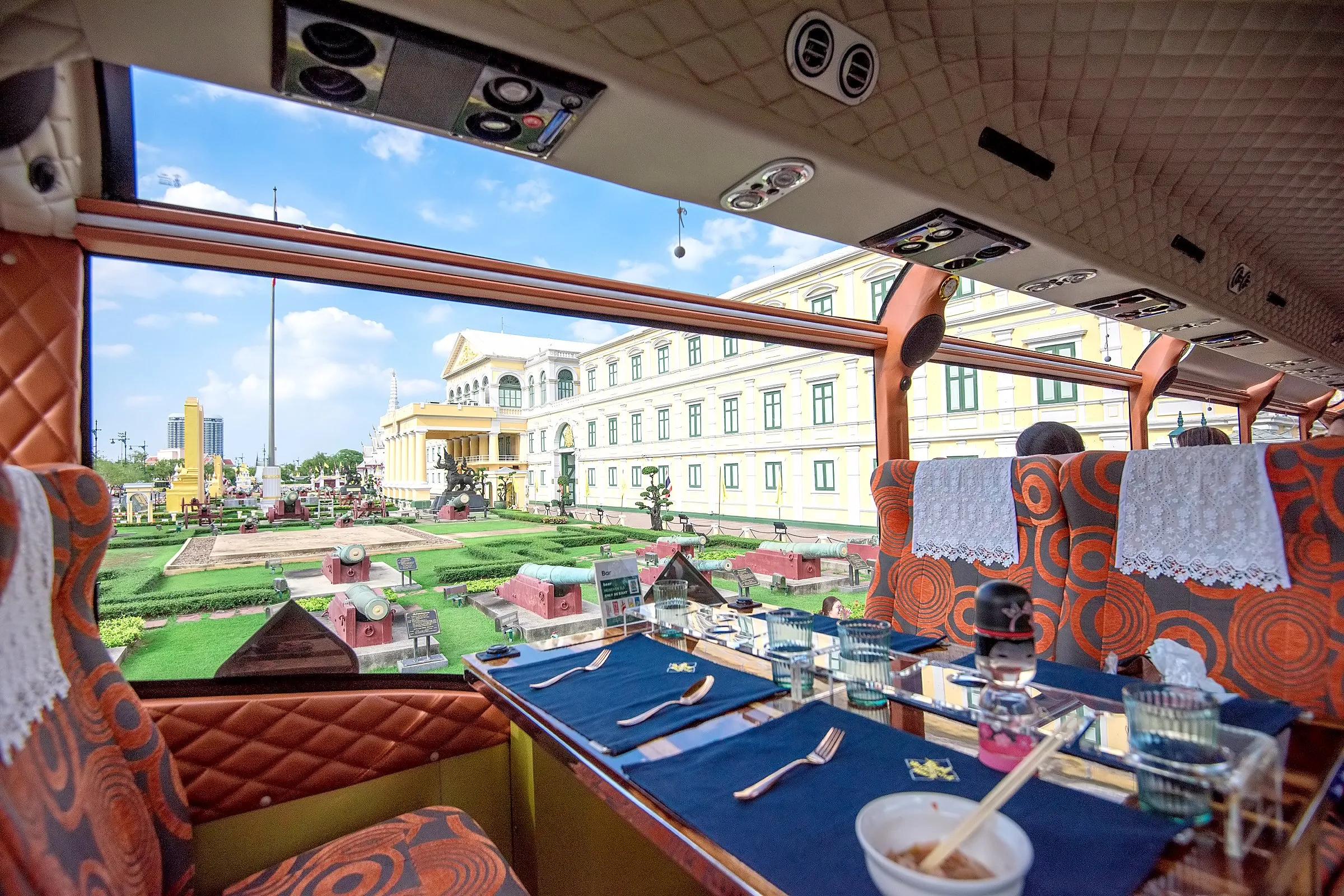
Afternoon Tea in Bangkok, Except the View Comes With You
Every afternoon tea in Bangkok offers the same thing: a lounge, a tiered stand, and a view that stays put. This one takes the view with it, past twenty landmarks.
Read more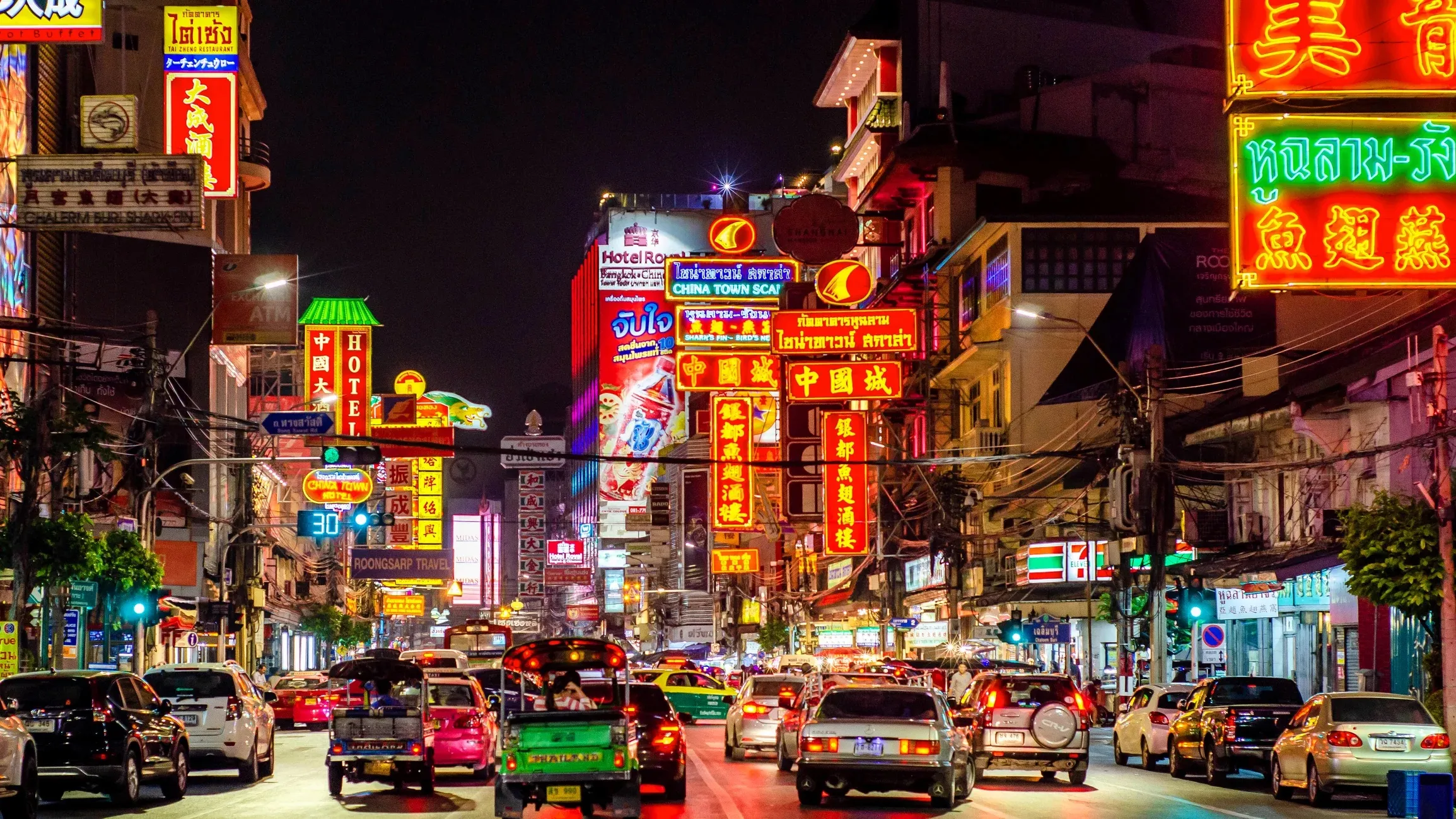
Bangkok Chinatown History: How Yaowarat Became the City's Most Delicious Street
Yaowarat exists because a king needed the land it stood on. Two and a half centuries later it's Bangkok's densest, brightest, most delicious street — here's how that happened.
Read more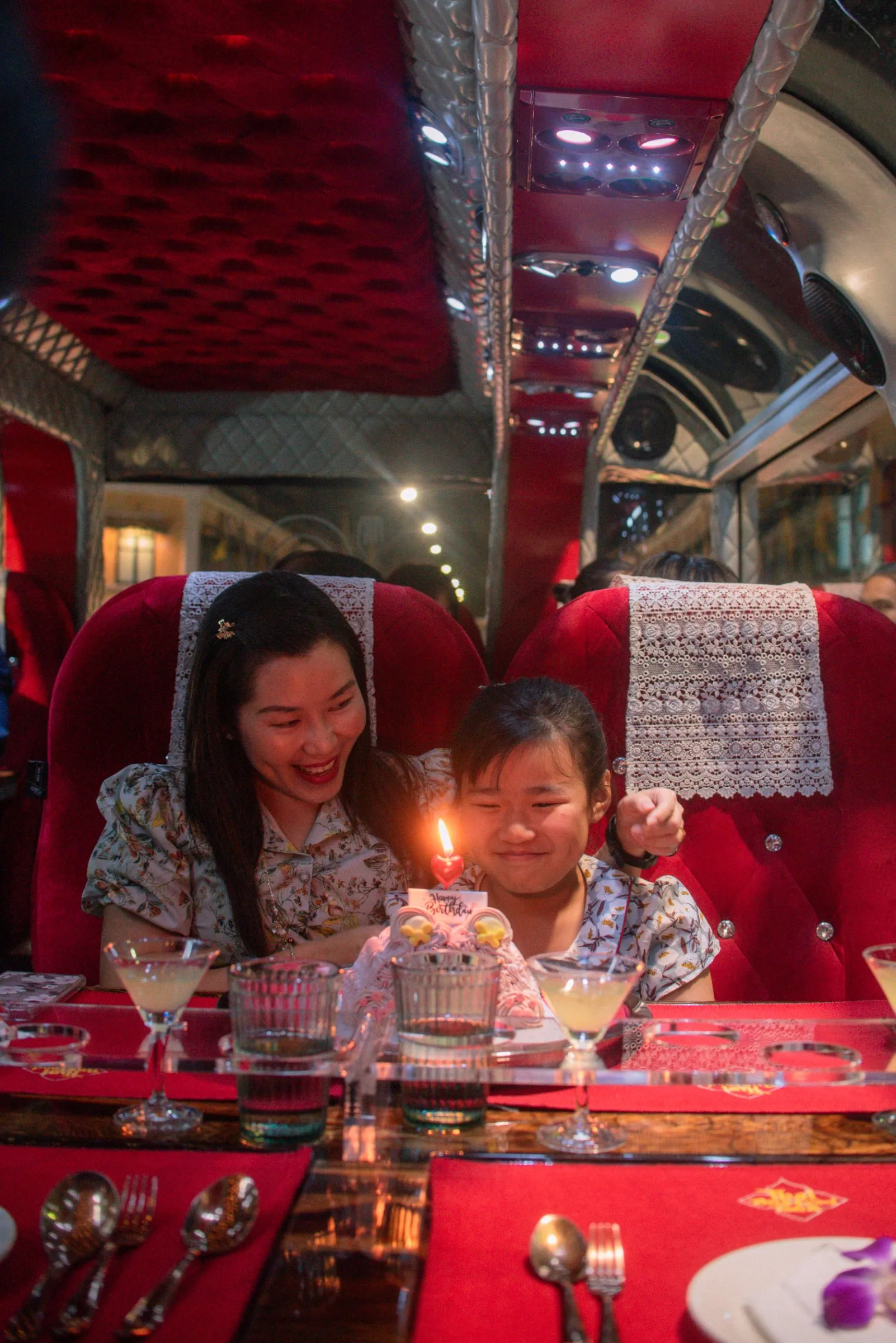
Birthday Dinner in Bangkok: The Celebration That Goes Somewhere
The problem with a birthday dinner is that everyone's been to the restaurant before. This one moves through the Old Town, so the evening has somewhere to go.
Read more